Keep the freeze-and-rescue idea. Change the rescue, movement or finish rule to suit your group. This illustrated guide helps you choose one change and explain it clearly.
Prepared by Freeze Tag Meaning · Checked October 13, 2026
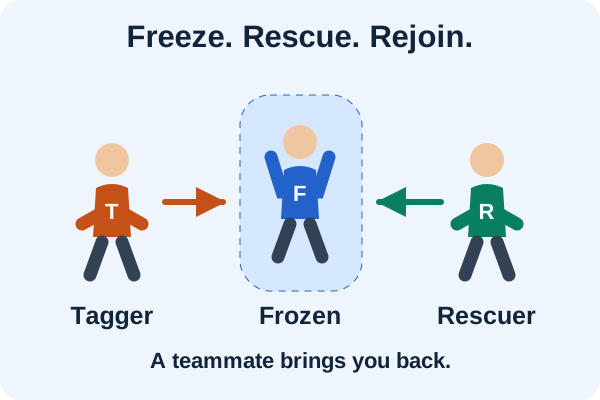
A caught runner stays frozen until a free teammate completes the agreed rescue.
TTaggerFFrozen runnerRFree runner
01 / Find your version
Compare the changes before you play
Start with the basic freeze tag rules. A variation should answer a specific need: a simpler rescue, a different pace, or a predictable end. These are options, not a universal rulebook.
Touch-to-rescue
A free runner tags a frozen teammate to release them.
Choose for a straightforward first round.
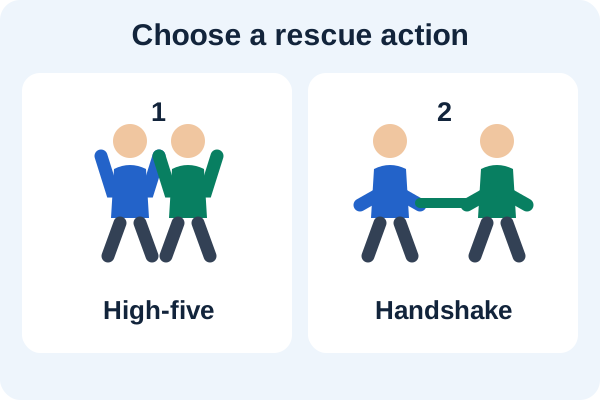
Double high-five
Rescue with a two-handed high-five.
Choose when you want a visible rescue action.
Handshake & share
Partners shake hands and exchange an agreed answer.
Choose for a slower social version.
Tunnel rescue
A teammate crawls through a frozen player's legs.
Consider the surface and participants first.
Walking freeze tag
Everyone uses walking rather than running.
Choose when a slower pace suits the group.
Timed rounds
End on an agreed signal, even if runners remain free.
Choose when you need predictable rotation.
02 / Change the rescue
Make the rescue easy to recognize
Demonstrate the action with two volunteers. Then ask the rest of the group to explain when the frozen player can move again. A clear demonstration is more useful than adding several rules at once.
Choose whether rescuer and teammate are protected during the action, and whether taggers may wait beside them. Announce the choice before starting; players should not have to guess halfway through a chase.
High-five and handshake rescues need different demonstrations. Use the action everyone agreed to.
01 / TOUCH
Touch-to-rescue
A free teammate gives the agreed gentle tag and the frozen runner rejoins. Keep the rescue and chasing tags distinguishable through the players' roles.
Explain first: which contact counts as a tag, and what to do if a player is frozen somewhere unsuitable.
Playworks describes a two-handed high-five rescue with protection during that action and no waiting beside the rescuing pair.
Our setup suggestion: practise the gesture while standing still, then repeat the protection rule aloud. Use an alternative action if this contact does not suit the group.
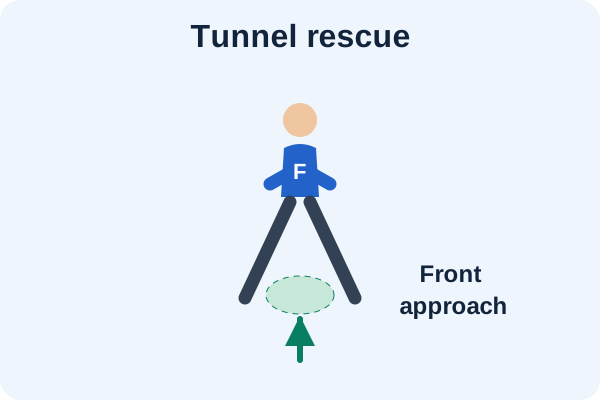
A frozen player stands with legs apart; a free teammate crawls through from the front. Playworks describes this as Tunnel Tag; Scouts describes a related game with this rescue.
Choose deliberately: use it only where the participants, clothing and surface suit crawling. A standing rescue can be the group's alternative.
The arrow shows the front approach for this version. The drawing is a rule illustration, not a recommendation for every group.
03 / Change the pace
Movement and timing are separate choices
05 / MOVEMENT
Walking freeze tag
Playworks lets a leader choose the movement used in a round. Walking is one option.
Our setup suggestion: agree on a pace everyone can use and pause if players return to running. A smaller area is not permission for rough contact.
06 / FINISH
Timed rounds
Scouts gives a time limit as an alternative to waiting until all runners are frozen.
Our setup suggestion: name the timekeeper, demonstrate the finish signal and decide the next tagger in advance. At the signal, stop movement together; count frozen players only if scoring was agreed.
Mixing a walking round with a high-five rescue is possible. Introduce each change separately so players can remember both. The children's setup guide includes a practice-round plan.
Choose a variation for the problem you have
1. Notice what is unclearAre rescues hard to see, roles confusing, or rounds too long? Ask players rather than assuming they need a harder version.
2. Change one ruleKeep the remaining rules familiar. Demonstrate the new action and repeat the boundary and finish rules.
3. Try, pause, adjustUse a practice round. If the change does not work, pause and agree on a simpler version before continuing.
What about Stuck in the Mud?
Names and rescue rules vary between groups. Scouts describes a Norwegian tag game as similar to both Freeze Tag and Stuck in the Mud. Ask players which rescue they expect instead of assuming a name defines every rule.
Does this change the online game?
These variations are for a playground activity. The site's Ultimate Freeze Tag game is Lisierre's separate single-player wizard game. Its controls and scoring are explained in the illustrated online guide.
Take it to the playground
Freeze tag: our agreed rules
Fill in the choices before playing. Print a copy for the person leading the round.
Everyone has seen a tag and rescue demonstration.
Everyone can explain the stop signal.
The group knows the boundaries.
We will pause before changing rules.
The button opens your browser's print dialog; you can print or save as PDF. Entries stay in this tab and are not submitted.
Sources and how to use this guide
Prepared by Freeze Tag Meaning. Source-specific variants are linked above. Comparison notes, planning suggestions and diagrams were created for this guide; they are not a claim of classroom testing or an official school policy.