Help children understand the game before the chase begins. Use a clear play area, a short demonstration and a predictable role change, then adapt the next round to your group.
Prepared by Freeze Tag Meaning · Checked October 13, 2026
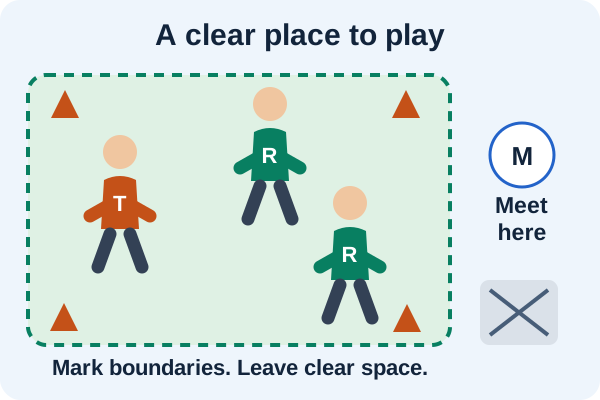
A planning example: chase inside the marked area and gather at a separate meeting point. The outline shows a layout, not a required size.
TTaggerFFrozen runnerRFree runner
01 / Before the chase
Make five choices together
In playground freeze tag, a tagged runner waits for a teammate rescue. Start with the basic rules, then agree on the details below. There is no one player count or round length that fits every group.
Where do we play? Point out the edges and walk the boundary with the group. Keep the gathering point separate from active chasing.
Who is the tagger? Make the role easy to identify. Explain that being frozen does not automatically make a runner the new tagger.
What counts as a tag? Demonstrate a gentle touch without grabbing or pushing. Playworks uses a light shoulder touch.
How do we rescue? Choose one action, such as a gentle touch or an agreed high-five. Demonstrate exactly when movement resumes.
When do we stop? Practise a clear signal. Choose a finish condition and tell players how the next tagger will be selected.
Our planning suggestion: ask a child to point to the boundary and show the rescue with a partner. If either is unclear, repeat the demonstration before adding speed or more taggers.
02 / Show, try, switch
Run a practice round first
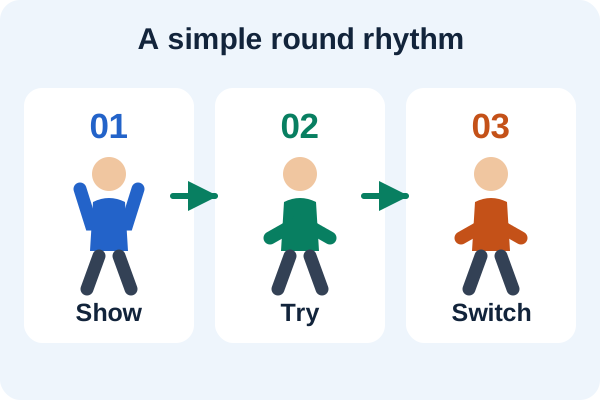
Use this sequence as an adjustable planning example. The goal of the first round is understanding the roles; it does not need winners, scores or a complicated rescue.
Show: two volunteers demonstrate a tag, a freeze and a rescue while the group watches.
Try: begin with the agreed movement and simple rules. Leave time to stop and clarify confusion.
Switch: gather at the signal, change the tagger, and explain any change before restarting.
For a first explanation you could say: “Stay inside our area. If a tagger gently touches you, freeze. A free teammate can rescue you using our agreed action. At our stop signal, everyone stops and we gather.”
Show one complete example, try a round, then pause and switch. Repeat the cycle as the group learns.
03 / Match the group
Adapt to understanding, space and participation
The ideas below are this site's suggested adjustments, not fixed age rules or a tested curriculum. Choose with the participants and the person responsible for the activity.
PRESCHOOL / KEEP IT CLEAR
Freeze tag for preschoolers
Try a familiar movement, a single rescue action and frequent opportunities to regroup. Rehearse “freeze” and the finish signal while children are standing still.
Demonstrate again if children change roles unexpectedly. Introduce another rule only when the first one makes sense to the group. Playworks publishes one version for ages 3–5; its exact setup is a reference, not a requirement for every preschool.
MIXED ABILITIES / ASK FIRST
Offer workable ways to join
Discuss the movement and rescue with the group. Consider walking, an agreed reachable rescue gesture, or a timekeeper role when these help participation.
Check that a chosen gesture works for the children involved. A role change should be an option discussed with the child, not a way to exclude them from playing.
LIMITED SPACE / RESET
Change the activity, not just the size
If the area is crowded, pause. Consider a slower movement, fewer players in a round, or a different activity. Check the available room again before restarting.
For indoor play, choose an appropriate open space rather than a narrow corridor or a room full of furniture. The planning diagram is a reminder to check the area, not a guarantee that a space is suitable.
MORE CHALLENGE / ONE CHANGE
Add a clear variation
When the basic cycle is understood, try a different rescue or a planned round ending. Explain the new version before play resumes.
Use the freeze tag variations guide to compare options. Avoid introducing a new rescue, new scoring and extra taggers all at once.
Rotate roles and handle disagreements
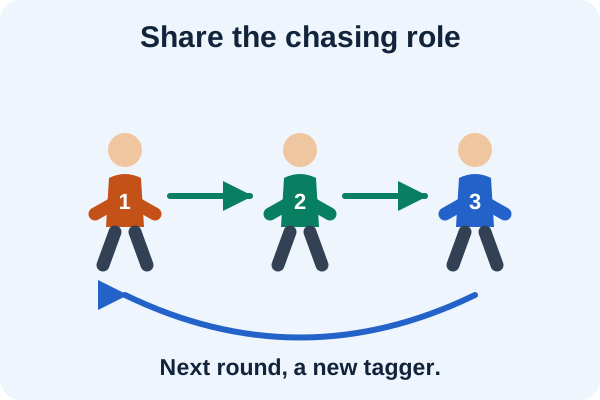
Choose how to rotate taggers before the first round. An announced order gives children a way to anticipate their next turn. It can also avoid repeatedly choosing only the fastest player.
If two players disagree about a tag, pause and restate the agreed action. A leader can restart a disputed moment without turning the discussion into a race. Change a rule between rounds, when everyone can hear it.
If players remain frozen for most of a round, ask why rescues are difficult. The group may need a clearer rescue, a different layout, or fewer taggers. Change one item and observe the next round.
An example rotation: player 1, then 2, then 3 becomes the tagger in successive rounds. Your group can choose another clear order.
04 / Use it in a PE session
A simple observe-and-reflect activity
For a freeze tag PE game, choose an observable focus before the activity. Examples are remembering the boundary, reacting to the finish signal, or finding a teammate to rescue. The following is an optional teaching aid, not a claim of alignment with a particular curriculum.
During play: notice which instruction needs another demonstration. Record an example of a successful rescue rather than just a final score.
At the pause: ask “What helped you know who could rescue you?” or “Which rule should we explain again?”
For the next round: let players suggest one change, discuss it and try it together.
Scouts uses reflection questions in its related freeze-and-rescue activity. Teachers looking for an equipment-based extension can consult PE Central's Beanbag Freeze Tag activity; it introduces additional skills and rules, so it is a separate version rather than a default beginner round.
Keep the playground rules and online game separate
Choose the details with your group. Fill this sheet in, then print it for the activity leader.
Play area checked and boundaries explained.
Tag and rescue demonstrated.
Finish signal practised.
Role rotation explained.
Participation needs discussed.
One question ready for the pause.
Your browser can print or save the sheet as PDF. Entries stay in this tab and are not sent to the website.
Questions parents and teachers ask
How many children should play?
Choose a group size the space and leaders can manage. Start with a practice round and adjust if players have little room or cannot recognize roles. A single number is not a universal rule.
Does every frozen child become a tagger?
Not in the basic freeze-and-rescue version. They wait for a rescue while the tagger continues. Announce any different role rule as a variation.
Do we need the tunnel rescue?
No. Choose a rescue that suits your participants and space. A touch or high-five version can keep the same freezing-and-rescue idea.
Sources and preparation
Prepared by Freeze Tag Meaning. The activity plan, leader script, printable sheet and original illustrations are this site's planning suggestions. Rule references below were checked on October 13, 2026. The guide does not claim classroom testing, professional teaching credentials or an official school policy.